For forty years, unbelief, grumbling, and rebellion kept ancient Israel from entering Canaan. Are the same sins delaying our entry into heavenly Canaan?
I remember standing at the base of the Burj Khalifa. The foundation really mattered when the tallest skyscraper was built. Do you have a solid foundation?
Two days before my wedding, I found myself staring at a monument that honors one of the biggest battles in history. I had no idea that this 300-foot-tall structure of stone and brick would one day strengthen my faith.
The fact that trials happen in your life is actually evidence that you are a child of God. Don’t fear any of those things. Be faithful unto death, Jesus said. Read his letter to you, straight from Revelation 2.
Should I pursue a relationship with this person? Does God want me to move or stay? How do I know if I’m on the right track? Scripture tells us that God speaks in three different ways to us.
One of the toughest things in life can be waiting. We all want quick answers to our prayers and sometimes, we feel down if our prayers are not answered right away.
Shortly after its launch, 16 young adults set out across San Diego to share books and distribute flyers for The End of Religion. The responses were remarkable. Whether people were shopping at Target, walking through local parks, or grabbing coffee at a café, they stopped in their tracks to watch the documentary.
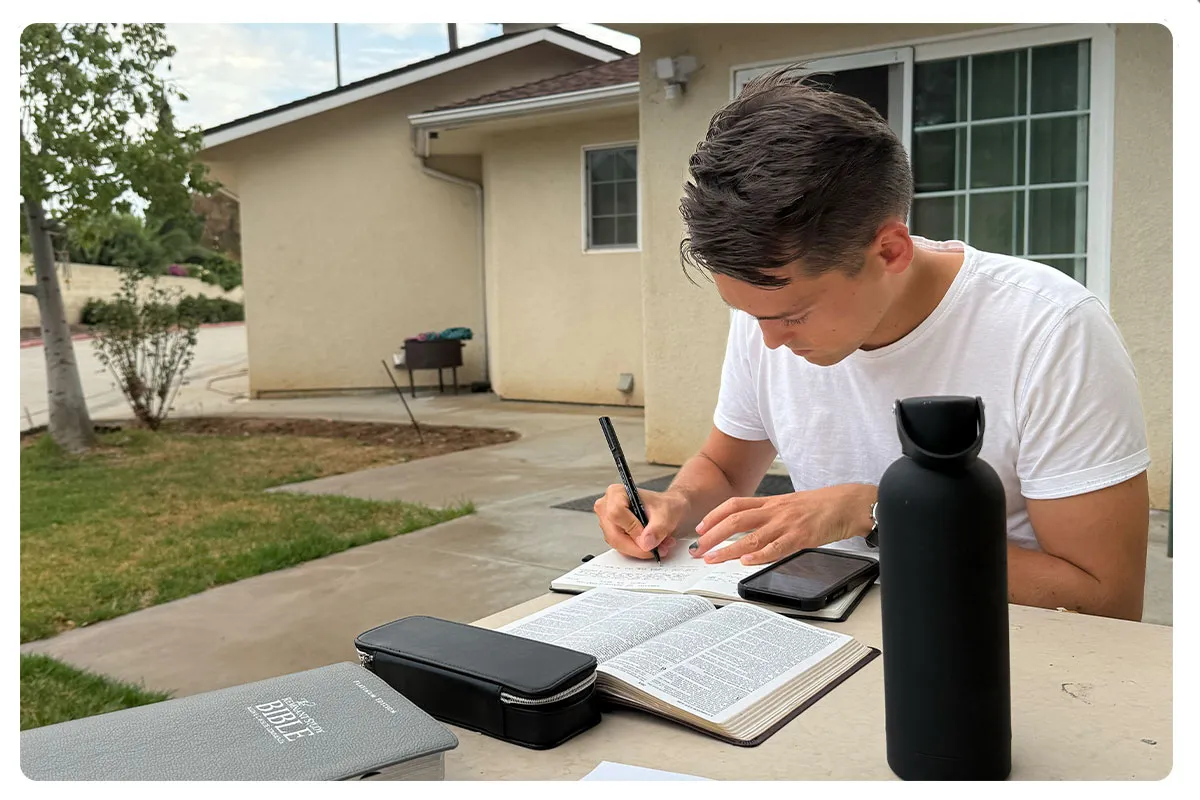
Who came up with this idea that we have to do our devotions every day? Do we have Biblical proof that God wants us to do that? Discover the beautiful “why” of a powerful devotional routine.
Do you have questions about the book of Numbers? Are you confused why God reacts or acts a certain way as He is guiding His people to the Promised Land?
Read · 1 min read
newsletter
Monthly newsletter
Our monthly newsletter with life-changing stories and ministry updates. We promise, you'll enjoy it.
“For the Lord your God has blessed you in all the work of your hand. He knows your trudging through this great wilderness. These forty years the Lord your God has been with you; you have lacked nothing.”
After 39 years of wandering around in the desert, the children of Israel were about to march to the Promised Land. The time of waiting was almost over. They had experienced countless miracles on the way. One of them was a miraculous stream of water that came out of a rock near their campsite. It had quenched their thirst for years and was a symbol for Jesus (1 Corinthians 10:4).
Now, God told them to go up north through a fertile and populated area called Edom. There, they could buy food and water, on the way to Canaan (Deuteronomy 2:3–6). It was just a short distance they had to travel without sustenance. Then, they would be home. The LORD was testing their faith one last time.
Is this generation trusting God or are they just like their fathers?
The fact that the water had stopped flowing should have been a reason for celebration—it meant that they were about to arrive in Canaan! But instead of rejoicing and trusting God, this new generation murmured and complained. Again. Just like their parents. They forgot the countless miracles and told Moses and Aaron they wanted to die (Numbers 20:3). They craved the blessings of the wilderness.
Do we crave the blessings of this world?
God has given us so much. Our fridges are full. We have A/C and heating whenever we want it. Our standard of living is higher than John D. Rockefeller’s. We fly across the globe, stream thousands of movies, order anything we want online, and wear different outfits every day.
Do our actions reflect our belief that we’re almost at the Promised Land?
What if God suddenly “cut the water supply” before we headed “north” to Heavenly Canaan? Would we be mad and frustrated or glad and thankful? I’ve clamored for the blessings of this world many times. I love the beach and the Californian sun. I enjoy driving our car. I take my health for granted. I get excited about ordering food at that vegan Vietnamese place. But when I lose these privileges—will I start complaining?
Remember this: when God takes some of our privileges and earthly blessings away, He’s testing our faith and telling us that we’re almost home.
“For forty years did unbelief, murmuring, and rebellion shut out ancient Israel from the land of Canaan. The same sins have delayed the entrance of modern Israel into the heavenly Canaan. In neither case were the promises of God at fault. It is the unbelief, the worldliness, unconsecration, and strife among the Lord’s professed people that have kept us in this world of sin and sorrow so many years.”
Weekly Devotional·3 min read
Why God doesn’t do more miracles
By Vincent Bujor
“But he said to him, ‘If they do not hear Moses and the prophets, neither will they be persuaded though one rise from the dead.’”
When I was about 10 years old, I stood in front of a big lake and thought about Jesus’ miraculous walk on the water. I said to myself, “I wish I could just run on the water right now… All these people standing nearby would be impressed! I would be in the news! All my friends would hear about it! And then I could tell them about Jesus! I know God can still do a miracle today! Why doesn’t He do it?”
Back then, I had no idea why Christ actually walked on water and performed countless other miracles. It was never to create hype. It was always to glorify His Father. Jesus didn’t work miracles for self-display. But the ones I wanted to see as a kid were (kind of) all about myself.
We love miracles
We all love miracles and, honestly, once we experience them, we can get pretty used to seeing them. That was the case for the Israelites in the wilderness. After they had complained about being hungry in the desert, God in His mercy gave them manna. He didn’t just provide it for a week or two, “the children of Israel ate manna for forty years” until they came “to the border of Canaan” (Exodus 16:35). Six times a week, food fell from heaven. On Friday, the double portion came, in preparation for the Sabbath. On Saturday, the fields were empty. Eight miracles every week, for forty years straight.
In total, the Israelites saw 16,640 miracles in the wilderness – all related to God’s provision for them – and yet they murmured, complained, and rebelled.
Experiencing miracles doesn’t make you a solid Christian. That’s why Jesus warned the Pharisees that even a resurrected person can’t persuade a stubborn heart – we have God’s word and that’s more than enough.
So… no miracles?
Does this mean that God doesn’t like miracles? Has He stopped the miracle business? Absolutely not. He “is the same yesterday, today, and forever” (Hebrews 13:8). But He doesn’t want your faith to be built on it. Real faith isn’t built on an experience. It isn’t built on a feeling. It is solely built on God’s word which defines reality (Romans 10:17, Genesis 1:3). The time will soon come when experiences and emotions will influence us in such a powerful way that we will be led astray if we don’t know the Word.
God is still performing miracles for His children today. In Communist Romania, Pavel’s dad walked through the air across a broken bridge. In Madagascar, Rama’s wife awoke from a coma and was healed. And in Germany, an angel in human form guided me through a high-security facility so I wouldn’t miss my train home.
God does it in times of need. He does it when His name is glorified. He does it when we step forward in faith, staying true to His principles and risking something for His name’s sake.
“We are not to establish our faith on the hope of seeing miracles. Satan will work miracles to accomplish his purposes. We must rely on a ‘Thus saith the Lord.’ It is the word of God, and perfect, sanctified unity that are to make Christ’s waiting ones complete in him.”
Weekly Devotional·2 min read
The power of a surrendered heart
By Tapiwa Mago
“Present your bodies a living sacrifice, holy, acceptable unto God, which is your reasonable service.”
Today, we feel a lot of pressure to perform well and do the right things. Sometimes, we can get the impression that this is what matters most to God, too. A perfect household. A perfect prayer life. Perfect habits. But there is something even more important to Him: He is looking for surrendered hearts.
Surrender Means Trusting God Completely
Throughout Scripture, God used ordinary men and women who were willing to surrender their will to Him. We cannot even do this on our own—the desire to surrender comes from God (Philippians 2:13). But we still have a choice to make. Do I want to trust Him completely? Do I want to choose His timing over mine? Do I believe that His plans are always the best?
Surrender is more than saying, “Lord, I believe.” It is choosing His will when it clearly differs from our own. Then and only then do we become powerful instruments for God’s glory. We cannot experience God’s best while resisting His will.
Surrender Brings Transformation
When we surrender something to Jesus, He changes us from the inside out. He renews our mind, shapes our character, and helps us become more like Him. We cannot see the Holy Spirit’s working on the heart. His work is invisible, just like the wind (John 3:8). But the transformation that comes afterwards is powerful and clearly noticeable. Our thoughts and habits change. We become more loving, humble, and peaceful. Joy begins to take the place of sadness. And so, many times—if we are willing—God changes our hearts before He changes our circumstances.
Surrender Leads to Purpose
Here is the beauty of full surrender: it leads to a life of purpose. The greatest impact comes from being fully available to God. He uses surrendered people to bless others and advance His kingdom. A life yielded to Him becomes a testimony of His grace, love, and power.
Today, God is asking for more than your words—He is asking for your heart. Lay your fears, dreams, plans, and burdens before Him. Trust Him with every area of your life. Always remember: Your surrendered heart is never wasted in God’s hands. It is the beginning of a life that honors Him and fulfills His purpose.
“The great outpouring of the Spirit of God, which lightens the whole earth with His glory, will not come until we have an enlightened people, that know by experience what it means to be laborers together with God. When we have entire, wholehearted consecration to the service of Christ, God will recognize the fact by an outpouring of His Spirit without measure; but this will not be while the largest portion of the church are not laborers together with God.”
Weekly Devotional·3 min read
Don’t skip this step in your walk with God
By Vincent Bujor
Dont skip this step
“See, I have this day set you over the nations and over the kingdoms, To root out and to pull down, To destroy and to throw down, To build and to plant.”
How do you build the world’s tallest skyscraper in the middle of a desert? I remember standing at the base of the Burj Khalifa, almost unable to see its 2,717-foot peak. It is a fascinating piece of architecture. And its success comes from something most people never see.
That tower sits on 192 concrete piles, drilled 15 stories into the ground. Those piles are anchored in a massive raft foundation. 110,000 metric tons of concrete protect the tower from Dubai’s salty groundwater. The foundation really mattered when the tallest skyscraper was built.
Do you have a solid foundation?
When God called Jeremiah to preach to the people of Judah, He told him to “root out and throw down” before he could “build and plant.” What doesn’t sound very positive or encouraging is actually the very first and probably most neglected step of our spiritual walk: to lay a sure foundation. How? By making a thorough work of repentance.
When it comes to following Jesus, many of us make fast decisions and think, “I can still work on my issues later.” But when the first trial comes, we get overwhelmed and fall. Some of us never get back up.
The deeper and more thorough your foundation though, the higher and faster you can build. It is expensive at first. It might even hurt. But it pays off. It is what brings you through the storms of life.
So how do I lay a deep foundation?
What does it mean to repent?
True repentance means to feel real sorrow and remorse for sin. “Blessed are the poor in spirit” and “blessed are those who mourn” that condition, Jesus said. It all starts with the realization that my own sins offended a holy God. My own choices have nailed Jesus to the cross. Repentance means to search my heart and honestly examine all my motives and secret sins. I need to set aside all pride and self-justification. And instead of excusing old choices or shifting the blame on others, I acknowledge my guilt and confess it to God.
Then, I pray and ask for forgiveness. I humble myself. Fasting might also be appropriate to hear God’s voice. “Be afflicted, and mourn, and weep: let your laughter be turned to mourning, and your joy to heaviness. Humble yourselves in the sight of the Lord, and He will lift you up.” (James 4:9-10).
How do I know it’s for real?
“By their fruits you shall know them,” Jesus said. Your own character and behavior will actually reveal it. You’ll notice a new determination to fight against sin and gain the victory over wrong habits. You’ll realize that the things you once hated you now love, and the stuff you once loved you now hate. You’ll feel a desire to reconcile with others and make things right. I remember texting people from high school years later and paying money back to an organization that never knew I had stolen from them.
You’ll discover Jesus’ love in your own heart. You’ll love those who don’t deserve it. All of that is evidence of a true conversion and a solid spiritual foundation.
“The humble and broken heart, subdued by genuine repentance, will appreciate something of the love of God and the cost of Calvary; and as a son confesses to a loving father, so will the truly penitent bring all his sins before God. And it is written: ‘If we confess our sins, He is faithful and just to forgive us our sins, and to cleanse us from all unrighteousness.’”
Weekly Devotional·2 min read
How to resolve conflict
By Vincent Bujor
“A man has joy by the answer of his mouth, And a word spoken in due season, how good it is!”
Did you grow up in a peaceful home?
Most of us didn’t. Many American homes look beautiful on the outside but broken on the inside. There is conflict and stress everywhere.
Often, we don’t share what’s really going on. Maybe a family member doesn’t want us to. Maybe we don’t want to come across as a failure. Or maybe we’re afraid others will judge us if we open up.
Today’s devotional may feel a bit different—that’s because it is. How can we focus on our walk with God if there is unresolved conflict in our own hearts? The Bible has a lot to say about how to handle conflict. Here are a few practical steps.
How to resolve conflict
Instead of demanding to be heard, God tells us to listen first. This first step may be the hardest. But “to answer before listening—that is folly and shame” (Proverbs 18:13). “Everyone should be quick to listen, slow to speak and slow to become angry…”(James 1:19).
Next, we should select an appropriate time to talk about it. “A word spoken in its time, how good it is!” (Proverbs 15:23). When I got married, I made the mistake of trying to address conflict while my wife was busy with something else. I had to learn to wait and select a good time to talk about the issue.
Once the conversation begins, define the problem together. “What’s the problem for you?” Define the areas of agreement and disagreement. “What do we agree on? What not?”
Then, identify your own contribution to the problem. This requires heart searching and complete honesty. It’s striking how public conflict sometimes makes one person appear totally righteous and the other person totally at fault. That’s almost never the case. Even during the months when I experienced the greatest hypocrisy and most cruel treatment at my workplace, I was still able to pinpoint to a few things I had done wrong.
Once you’ve identified your contribution to the problem, state positively what changes on your part would probably help (“I can do this…”). Ask for the other person’s opinion. Listen.
Healthy relationships aren’t built by winning arguments. This week, let’s ask God to show us how we can resolve conflict and become peacemakers.
“‘Blessed are the peacemakers.’ The peace of Christ is born of truth. It is harmony with God. The world is at enmity with the law of God… and as a result they are at enmity with one another. But the psalmist declares, ‘Great peace have they which love Thy law: and nothing shall offend them.’ Psalm 119:165. Men cannot manufacture peace… The only power that can create or perpetuate true peace is the grace of Christ. When this is implanted in the heart, it will cast out the evil passions that cause strife and dissension.”
“If pride and selfishness were laid aside, five minutes would remove most difficulties.”
Weekly Devotional·2 min read
Find Me one
By Vincent Bujor
“Run to and fro through the streets of Jerusalem; See now and know; and seek in her open places, if you can find a man, if there is anyone who… seeks the truth, and I will pardon her.”
One question we don’t always say out loud is: “God, can you really forgive me? I’ve committed this sin over and over again…”
What if I have been on that website for more than two hundred times? What if I have crossed that line with my boyfriend again? What if I promised God I’d stop, and then I did it again the very next week?
There was a time in my life when I struggled with a specific sin. I knew it was wrong, and I pledged over and over again that this would be the last time I would fall into it. But not long after, it happened again. And again. I found myself caught in a helpless cycle that I couldn’t seem to break. I remember crying bitter tears, asking God to forgive me. But it happened so often that I genuinely felt embarrassed to go back to God.
Could I really claim 1 John 1:9 again? I had already done that dozens of times. How could I come back and ask for forgiveness for the same thing? It seemed ridiculous!
What we need to know
I wasn’t any further away from God than the Israelites were in the time of Jeremiah. They had fallen into deep rebellion and apostasy—sacrificing their own children in the fire, worshiping the moon and stars, and insisting that God would never bring judgment upon them.
If anyone seemed too far gone to come back to God, it was them.
And yet, God told them, “Find Me one righteous person in Jerusalem—one who still obeys Me—and I will spare the entire city for the sake of that one man or woman.”
Just one person. Not 50. Not 45. Not even 10.
God was willing to show mercy to tens of thousands of selfish, rebellious people for the sake of just one person with a contrite heart. What a great God we serve!
Don’t ever think you’re too far away from His mercy. “If any of you are driven out to the farthest parts under heaven, from there the Lord your God will gather you, and from there He will bring you” (Deuteronomy 30:4).
There is no place too dark and no sin too great. 1 John 1:9 still stands, waiting for you to claim its promise in faith. And remember, we also have something practical to do. Paul urges us to flee from sexual immorality (1 Corinthians 6:18). Many temptations can be avoided if we don’t put ourselves into certain situations or environments. I wish I had understood that earlier.
“I have evidence—the very best—that God loves you. He will not thrust you from Him in your weakness, for He loves you. Do not worry yourself out of the arms of Jesus, but just repose in restful quietude in His love. His grace will be all-sufficient for you when heart and flesh shall fail. He will give you His peace and His grace. Gather to your soul God’s promises, for Jesus is your constant, unfailing friend.”
Weekly Devotional·2 min read
When you struggle to forgive
By Vincent Bujor
“…bearing with one another, and forgiving one another, … even as Christ forgave you, so you also must do.”
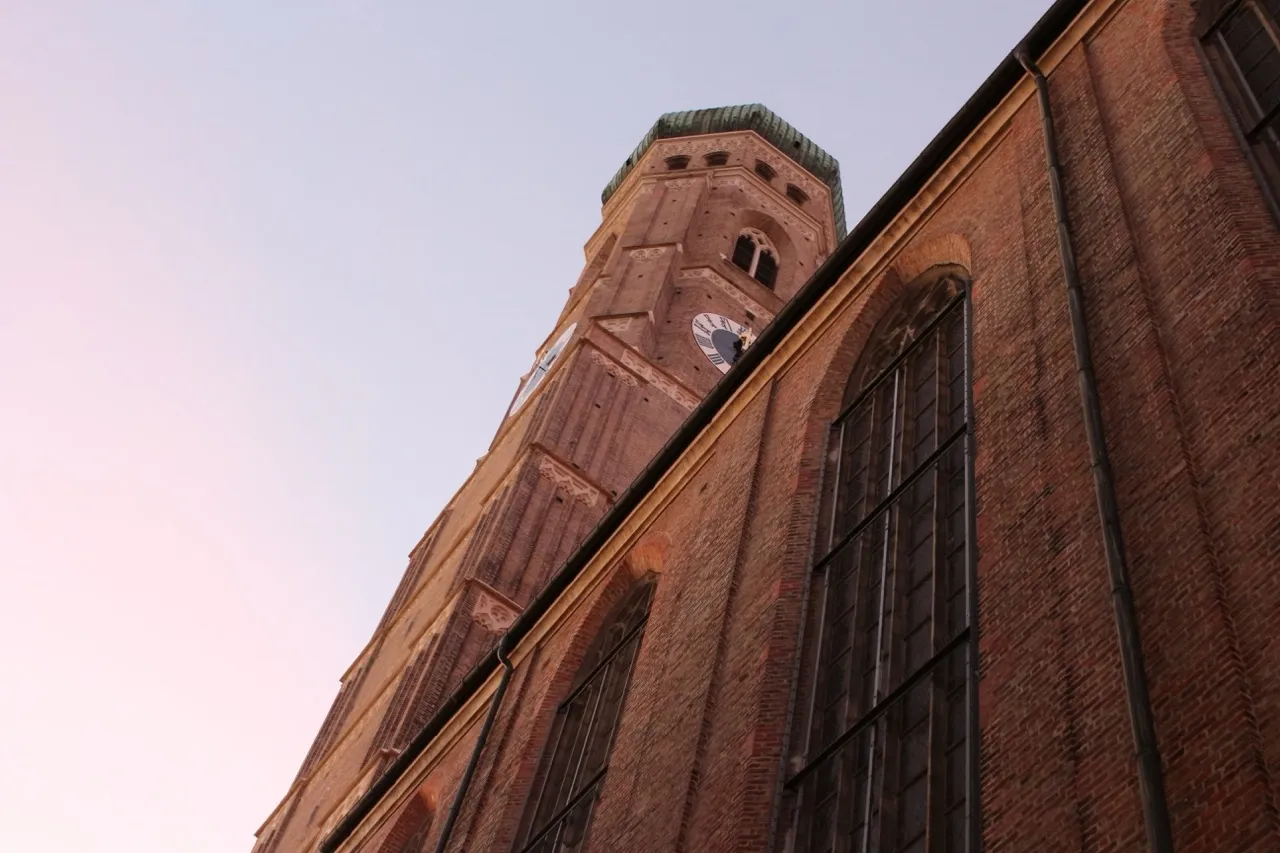
It was at a church service in Munich when she saw him: a former S.S. guard from a concentration center at Ravensbrück.
Suddenly, it was all there—the room full of mocking men, the heaps of clothing, her sister’s pain-blanched face.
Corrie looked at the man. She had made it out alive. Her sister had not.
And now, the former Nazi soldier came up to her as the church was emptying, beaming and bowing.
“How grateful I am for your message,” he said. “To think that, as you say, He has washed my sins away!” Then he held out his hand to shake hers.
Could you forgive a man who was responsible for killing your sister?
Corrie couldn’t. She kept her hand at her side. Then, while the angry and vengeful thoughts boiled within her, she realized that Jesus had died for this man. She prayed a silent prayer, “Lord Jesus, forgive me and help me to forgive him.”
She tried to smile. She couldn’t. She tried to raise her hand. It wouldn’t move. Her heart was empty. No warmth. No love.
Have you ever wanted to do God’s will, but your emotions stood in the way?
Corrie prayed another silent prayer. A prayer of surrender. “I cannot forgive him. LORD, give me Your forgiveness.”
Then, she took his hand and something incredible happened. From her shoulder to her arm and through her hand this current passed from her to him, and suddenly, she felt a love for this stranger that almost overwhelmed her.
That day, Corrie ten Boom discovered that true forgiveness is a miracle that only Jesus can provide. It is not on our forgiveness or our own goodness that the world’s healing hinges, but on His. God tells us to love our enemies, and He gives us—along with the command—the love itself.
Excerpted and adapted from The Hiding Place, 35th Anniversary Edition (Grand Rapids: Chosen, 2006), pp. 247–248. Pronouns and other minor wording have been changed from first person to third person.
“We need to study the example of Him who was meek and lowly, who, when he was reviled, reviled not again. A vindictive spirit will not be indulged by a true Christian. (…) He who possesses the Spirit of Christ will never be weary of forgiving.”
Weekly Devotional·3 min read
The mistake I made on a volcano
By Sebastian Latorre
“And how shall they believe in Him of whom they have not heard? And how shall they hear without a preacher?”
The summit of Quetrupillán Volcano in southern Chile was hidden behind a thick cloud.
After hours of hiking, I had finally reached the top. The wind was fierce, visibility was almost zero, and I could not even see the crater beneath my feet. Along the way, I had passed a few hikers coming down, but now the mountain seemed empty. I thought I was the last one up there.
Thankfully, I had been tracking my route with a GPS. In conditions like these, it can be a lifesaver. I pulled it out, selected “track back,” and prepared to follow my route down, since the trail had completely disappeared into the fog. Just as I was about to take my first step, two friends suddenly emerged from the cloud.
“Where’s the trail?” one of them shouted. “I can’t see anything.”
“Don’t worry,” I replied. “I have the GPS. Just follow me.”
We began descending. The wind cut through our layers, and the cold seemed to intensify with every passing minute. One of my friends was exhausted, so I often had to stop and wait for them to catch up.
Eventually, the trail became more visible. I turned around and saw them resting behind me. The wind was so loud that we could not communicate. I waved. I shouted. Nothing.
Then I made a decision. My friend is more experienced than I am. The trail is obvious now. They are probably fine.
And if I am honest, another thought crept in: I’m freezing. I just want to get down.
So I continued alone. Before long, the clouds cleared, and I reached the bottom, where the rest of our group was waiting.
“Are you the last one?” someone asked.
“No,” I answered. “Two more are behind me. Maybe thirty minutes.”
Thirty minutes passed.
Then an hour.
They never arrived.
The atmosphere changed. What if they were lost? What if they were injured? A search team began organizing to go back up the mountain.
As I stood there, exhausted and unable to join the search, a painful question echoed in my mind:
Is this my fault?
The truth is, I had made assumptions.
I assumed they could see the trail.
I assumed they knew where to go.
I assumed they did not need me anymore.
But I was wrong.
The reality was that I had the GPS. I knew the way. Going back to check on them would have cost me some comfort, some time, and some effort—but I chose myself instead.
How often do we do the same spiritually?
We know Jesus. We know His promises. We know where hope is found. Yet we often assume that the people around us already know enough. We assume someone else will help them. We become focused on our own comfort and stop guiding those who may be struggling behind us.
That day, my friends eventually made it safely to a cabin, where others helped them, warmed them, and pointed them in the right direction. But they had been lost. My assumptions had been wrong. Years later, that experience still hurts to remember.
Yet God used it to teach me something I will never forget: His call has not expired (Matthew 28:19-20). There are still people searching through the fog. And if God has shown us the way, perhaps someone is waiting for us to slow down, turn around, and help them find the path as well.
“Let each of you look not only to his own interests, but also to the interests of others.” Philippians 2:4
“Many are sad and discouraged, weak in faith and trust. Let them do something to help some one more needy than themselves, and they will grow strong in God’s strength… As they plead with the Lord to help them, He will guide them to those who are seeking for the light. Christ will be close beside them, teaching them what to say and do. By comforting others, they themselves will be comforted.”
Weekly Devotional·2 min read
Someone is on the throne
By Vincent Bujor
“Behold, a throne set in heaven, and One sat on the throne.”
In Psalm 11, David struggled with this. He wrote, “The foundations are being destroyed,” and the wicked shoot “their arrows against the upright in heart.” Then, David asked the crucial question, “what can the righteous do?”
What can we do if we’re being attacked? Nothing. David didn’t seem to answer his question. Instead, he continued, “The Lord is in His holy temple; the Lord is on His heavenly throne.”
But that actually is the answer. Rather than offering a human solution or a quick fix, David pointed us to the unchanging reality that God still sits on His heavenly throne. His throne stands in opposition to the throne of Satan and the throne of the beast in Revelation 13. Throughout Scripture, believers have clung to God’s throne in times of disaster and despair.
What’s so powerful about God’s throne?
It’s simple. It reminds us of something:
God is still the Commander of the universe.
He rules. He oversees. He judges. He cares for you. He never changes.
He is with you. He hears your prayers.
Nothing happens without His permission.
The LORD maintains your cause and executes judgment for you. (Psalm 9:4-5)
When I started my first business in Germany, the multibillion-dollar car company Audi challenged my business name, claiming it was too similar to theirs. I was a college student with barely enough money to support myself, let alone hire a lawyer. Anxiety overwhelmed me when I opened their letter. I prayed and called a close friend in New York who happened to be a patent attorney. Together, we wrote a response—and the case was dismissed. But Audi didn’t give up. Their entire legal department continued fighting for nine years, eventually taking the dispute all the way to Germany’s Federal Court of Justice—the country’s highest court.
Yet they did not win. Their claim was rejected twice, and then they eventually gave up. I could have spent those years worrying, hiring lawyers, and fighting desperately. Instead, God kept reminding me that He was still on the throne.
“Are you filled with sorrow today? Fasten your eyes on the Sun of Righteousness. Do not try to adjust all the difficulties; but turn your face to the light, to the throne of God. What will you see there? The rainbow of the covenant, the living promise of God. Beneath it is the mercy seat, and whosoever avails himself of the provisions of mercy that have been made, and appropriates the merits of the life and death of Christ, has in the rainbow of the covenant a blessed assurance of the acceptance with the Father as long as the throne of God endures. Faith is what you need. Do not let faith waver. Fight the good fight of faith, and lay hold on eternal life. It will be a severe fight, but fight it at any cost, for the promises of God are yea and amen in Christ Jesus. Put your hand in the hand of Christ.”
Weekly Devotional·3 min read
One question even God can’t answer
By Vincent Bujor
“How shall we escape if we neglect so great a salvation…? Therefore we must give the more earnest heed to the things we have heard, lest we drift away”
On June 14, 2017, the UK experienced its worst residential fire since WWII.
It happened in West London at around 1:00 AM, when a refrigerator in an apartment complex caught fire. Normally, this should have been a relatively contained fire. But flames went through the window, reached the exterior cladding, and engulfed the entire 24-story building for more than 60 hours.
72 people died — mostly low-income families, immigrants, children, and the elderly. Why?Because of neglect.
Companies, manufacturers, and managers didn’t think it was that important. It was not important to emphasize fire risks on construction materials. It was not important to stop unsafe work. It was not important to review evacuation plans. It was not important to listen to the residents.
But all these small neglects, over the course of many years, ended up creating a tragedy that shook the nation.
God made an even more shocking statement in Hebrews 2.
“How shall we escape, if we neglect so great salvation…?” How shall we make it to heaven, if we become indifferent to the infinite sacrifice made by Christ? It is a question God Himself can’t answer. Because there is no escape.
What God didn’t say.
God didn’t say, “How shall we escape the judgment if we refuse…” He didn’t say, “How shall we escape if we reject and scorn…” He didn’t say, “How shall we escape if we rebel…” He just said, “How shall we escape if we neglect…” That’s all?
There was a time when I neglected.
When my wife and I moved to Warner Springs, our son had just been born. It was a turbulent time. He didn’t like to sleep, so we were constantly up, trying to figure out parenthood. We didn’t have our families nearby, so our days were chaotic.
The man who for years preached on devotions and morning routines suddenly neglected his prayer and Bible study time. I went from having a 2-hour Bible study to having nothing. Skipping one day after another. Praying short prayers half-asleep. Being overwhelmed with the busyness of life.
Maybe you know that feeling. Neglect is often subtle and does not require open opposition to the truth. It happens slowly and includes spiritual sloth, worldliness, and the failure to improve our talents.
Is there a spiritual discipline you’re currently neglecting?
Jesus took the greatest risk and came down to this earth to taste death and eternal separation from His Father. He did it for you, because He loves you so much. He gave you “so great salvation” — and we cannot afford to neglect what cost Him everything.
Let’s make a few decisions today that lead us closer to Him. Let’s “undo” past mistakes by caring more. Let’s make up our mind to put Him first — moment by moment.
“It is not merely the profane swearer, the murderer, the adulterer, the liar, the deceiver, who must feel the wrath of God… Those who have enlightened minds and consciences and who have a full knowledge of the truth and the requirements of God, yet continue to live in a state of indifference and spiritual sloth, are virtually neglecting this great salvation and cannot expect to escape the penalty of this neglect.”
Weekly Devotional·3 min read
The day God’s prophecy almost failed
By Vincent Bujor
When Gods prophecy almost failed
“As you saw iron mixed with ceramic clay, they will mingle with the seed of men; but they will not adhere to one another, just as iron does not mix with clay.”
Two days before my wedding, I found myself staring at a monument that honors one of the biggest battles in history.
My groomsmen and I were taking a walk through Leipzig, Germany, and I had no idea that this 300-foot-tall structure of stone and brick would one day strengthen my faith.
That thing is called the Monument to the Battle of the Nations. It was built to remind us of Napoleon’s biggest defeat ever. In 1813, he lost to a coalition of Russia, Prussia, Austria, and Sweden. After this, his control over Europe basically unraveled.
Why is this important?
Like Adolf Hitler, Wilhelm II, and Philip II of Spain, Napoleon sought to unite Europe under a single empire. But 2,400 years before, God had declared that after the fall of Rome, no world empire would ever take its place. Europe would be divided into many nations—and they would never unite again.
Humans have tried it for hundreds of years. But God’s Word has never been broken.
Napoleon lost that battle of Leipzig. A year later, Paris fell, and then, he was defeated at Waterloo for the final time.
Here is the most remarkable part: The general who unknowingly fulfilled Bible prophecy by taking the pope captive in 1798 died mysteriously just seventeen days before Napoleon’s final defeat. Napoleon later wrote, “Had Berthier been with me, I would probably have won that battle.” But he wasn’t there. God had used an atheist general to fulfill one prophecy, and when another prophecy stood on the line, that general was suddenly gone.
The devil and Napoleon
Just like Napoleon was about to break Daniel’s prophecy in 1813, the devil tempts us to lose faith in God’s word every day.
What plans does God have for your life? Are you confident He will keep His word?
We’re tempted to question previous decisions.
We’re tempted to generalize God’s promises.
We’re tempted to look for fulfillment in other things.
We’re tempted to think we won’t overcome that sin.
But God “is able to do exceedingly abundantly above all that we ask or think, according to the power that works in us” (Ephesians 3:20). He will finish what He has started (Philippians 1:6), He is “able to keep you from stumbling” (Jude 24), and He gives you one victory after another to live “righteously and godly in this present age” (Titus 2:12). Don’t listen to the enemy when he tells you these words are not for you. They were written for you personally!
When the Dead Sea Scrolls were discovered in 1947, one of them contained the entire book of Isaiah. Scholars carefully unrolled the ancient manuscript—over 24 feet long and more than 2,000 years old — and found, almost at the very center, this famous message: “The grass withers, the flower fades, but the word of our God stands forever” (Isaiah 40:8).
Dust could not silence it. 2,000 years could not erase it. Napoleon couldn’t prove it wrong. God’s word still stands.
“Let us have more confidence in our Redeemer. Turn not from the waters of Lebanon to seek refreshment at broken cisterns, which can hold no water. Have faith in God. Trustful dependence on Jesus makes victory not only possible, but certain. Though multitudes are pressing on in the wrong way, though the outlook be ever so discouraging, yet we may have full assurance in our Leader; for ‘I am God,’ he declares, ‘and there is none else.’ He is infinite in power, and able to save all who come to him. There is no other in whom we can safely trust.”
Weekly Devotional·3 min read
When God can’t help us
By Vincent Bujor
“So the Lord was with Judah. And they drove out the mountaineers, but they could not drive out the inhabitants of the lowland, because they had chariots of iron.”
God is with you. Do you believe it?
The book of Judges starts with a powerful overture. After Joshua’s death, the Israelites continued to drive the Canaanites out of the land to inherit what God had promised them. The entire first chapter tells us stories of victory and triumph…up until verse 19.
Suddenly, they couldn’t defeat the enemy. They “could not drive out the inhabitants of the lowland, because they had chariots of iron.”
Why could they not? Did God lose His strength here? Did He decide to stop helping His people?
Absolutely not. “Behold, the LORD’s hand is not shortened, that it cannot save; neither is His ear heavy, that it cannot hear” (Isaiah 59:1). The beginning of the verse clearly states that God was with them. He helped the Israelites drive out the mountaineers — but “there was no driving out” in the valley because those enemies had chariots!
God had worked countless miracles before, yet He could not help in that moment because His children lacked faith.
How many times have I tied God’s hands with my own unbelief?
When I didn’t believe God would give me this job. When I didn’t believe my wife would get pregnant. When I didn’t believe God would heal that person. When I didn’t believe God would save this family member.
Sometimes, I surrendered my unbelief to Him, and He came through just in time. But in other situations, I missed out on mighty miracles because I didn’t want to believe.
So how can we believe?
“Faith comes by hearing, and hearing by the word of God” (Romans 10:17).
1) Immerse yourself in God’s word. Listen to it, read it, study it, and memorize it. Dive into those ancient stories where God’s people made the sun stand still, where the waters parted, where humans walked on water and angels shut the mouths of lions. You’ll quickly see that this is the reality God wants us to experience.
2) Start praying like you believe it. This sounds weird if you have never tried it. But it really works. Ellen White once wrote, “Those who talk faith and cultivate faith will have faith, but those who cherish and express doubts will have doubts.” In 2024, my spiritual mentor heard that we were expecting our first baby, so he started praying that God would give us our own house. In Southern California. As a minister. Right after I had lost my job. When he prayed that prayer, we were living with four other people in someone else’s house. I almost had to laugh — that’s how strong my unbelief was. But two months later, God gave us two new jobs and free housing on a huge property. We didn’t even have to pay utilities!
Friends, God is with you.
His hand is not shortened.
Ask, and you shall receive.
He can surely do the mightiest miracles.
“Go into a cellar, and you may well talk of darkness, and say, ‘I cannot see; I cannot see,’ But come up into the upper chamber, where the light shines, and you need not be in darkness. Come where Christ is, and you will have light. Talk unbelief; and you will have unbelief; but talk faith, and you will have faith. According to the seed sown will be the harvest. If you talk of heaven and the eternal reward, you will become lighter and lighter in the Lord, and your faith will grow because it is exercised.”
Weekly Devotional·3 min read
Satan’s lie about freedom
By Vincent Bujor
True freedom is a paradox
“But he who looks into the perfect law of liberty and continues in it, and is not a forgetful hearer but a doer of the work, this one will be blessed in what he does.”
We all love freedom.
There is probably nothing we’d trade it for. We want the freedom to make our own decisions, pursue our dreams, and express our beliefs.
This weekend, we celebrate America’s 250th birthday. The freedom we enjoy today is an immense privilege, but some of us don’t feel free — some feel trapped.
Trapped by anxiety. Trapped by comparison. Trapped by addiction. Trapped by regret, shame, or pressure from others.
True freedom is actually a paradox for the modern mind.
It doesn’t come from doing whatever we want. James wrote that God’s law is the “perfect law of liberty,” meaning obedience to that law gives us freedom. But how, in the world, can obedience to a set of rules give us freedom?
Well, God’s law isn’t a collection of rules. It’s a reflection of His character. It’s the recipe for a happy life.
And it all starts with knowing Christ. For the sinner, God’s law is a yoke (Romans 8:7). But Christ said that knowing the truth will set us free (John 8:32). Truth is a Person, so only by becoming one with Him can we enjoy freedom.
Let’s make this a little more practical.
Satan deceives us by making us think that living in sin is freedom. Watching and eating what we want, saying and doing what we want—that’s all part of freedom, right?
Not really. At the end of that road, we’re trapped—trapped by evil consequences, pain, suffering, addictions, and the whole nine yards of mess that comes with selfish decisions. I don’t have to explain it to you; you’ve felt it before. It first feels free, but then it feels pretty ugly.
This is why James calls God’s moral law the law of liberty. By obeying, we don’t end up in Satan’s trap. We have a clear conscience. We live without shame. We live without constantly defending our choices. We live without feeling enslaved by our impulses or cravings.
The psalmist says: “I will walk at liberty, for I seek Your precepts.” “Your testimonies also are my delight and my counselors” (Psalm 119:45, 24).
This is obviously a journey, and we might still fall short from time to time. But this weekend, remember that the greatest freedom you can achieve comes from obedience to the words of the One who loves you most.
I can’t tell you how many blessings and joys I’ve received after encountering Christ and choosing to obey His words.
Others wrestle with addiction, but I don’t. Others can’t sleep at night, but I sleep like a baby. Others are always pursuing more, but I am content. Others are afraid, but I enjoy God’s protection.
If you haven’t gone all in for God, I invite you to try it. It’s a life-changing, liberating experience.
“The youth have an inborn love of liberty; they desire freedom; and they need to understand that these inestimable blessings are to be enjoyed only in obedience to the law of God. This law is the preserver of true freedom and liberty. It points out and prohibits those things that degrade and enslave, and thus to the obedient it affords protection from the power of evil.”
Weekly Devotional·2 min read
How to live a fearless life
By Vincent Bujor
“Speak to the children of Israel, that they turn and camp between Migdol and the sea…you shall camp before it by the sea. And Moses said to the people, ‘Do not be afraid. Stand still, and see the salvation of the Lord, which He will accomplish for you today.’”
When God brought the Israelites out of Egypt, He did something incredible.
Knowing Pharaoh would change his mind again and pursue them, God led His children into a deep valley, right to the shore of the Red Sea. Have you ever asked yourself why the Israelites freaked out, but Moses was so calm, telling everyone, “Do not fear”?
Exodus 14:2 tells us why. God had spoken to Moses and told him specifically to go to this place: “You shall camp before it by the sea.”Moses went there because God had said so! That’s why he felt no fear of the consequences.
This is a powerful concept. Think about your current situation, your future, and what lies ahead of you.
Here’s how to feel no fear. How to live a fearless life.
Listen to God’s voice (through His word)
Obey His commands (even if it goes against my own selfish will)
Remember that God led me here when danger comes— I didn’t just end up here; I obeyed! So He will take care of me.
Too often, we forget how God has led us in the past.
We don’t remember that we prayed about this before making a decision.
We don’t remember that it was Jesus who told us to do this.
So when problems come, we doubt and fear, just like the Israelites. But if Jesus told us to do it, He’ll take care of it!
The most difficult part of all this isn’t being courageous when danger comes.
The most difficult part is obeying God’s voice when it seems irrational, outdated, and counterintuitive. When your friends tell you to do something else and society screams at you to disobey. But if you make up your mind to follow Jesus no matter what, you will experience real miracles in your life!
Pharaoh might try to destroy you, mountains might surround you, and the raging sea might be right in front of you — but you don’t need to fear. Just like Moses, you can be sure that God brought you to this place, so He’ll take care of what stands in your way.
“Could we always discern the everlasting arms around and beneath us, there would be no occasion for the exercise of faith. The way of God’s choosing may seem dark, yet it is the surest way to the light. In the midst of apparent disaster and defeat, God’s providence is working out his purposes.”
Weekly Devotional·2 min read
When you do your best and life still breaks you
By Vincent Bujor
“Do not fear any of those things which you are about to suffer … You may be tested, and you will have tribulation ten days. Be faithful until death, and I will give you the crown of life.”
This letter by Jesus, given to John, describes the Christian church during the 2nd century — a letter to God’s people who were persecuted and tortured all throughout the Roman Empire. But this letter is also one for you and I today. Let’s unpack it.
“I know your works, tribulation, and poverty (but you are rich)”
All of us go through trials and tribulation. Once we are converted, we live a different life than the people in the world. We might even struggle with poverty. But Christ says we are still rich. Rich in blessings. Rich in spiritual health. Rich in having the truth. Rich in character.
“Do not fear any of those things…”
Then, He said we shouldn’t fear those things we are about to suffer.
Don’t fear the future.
Don’t fear making the wrong decision.
Don’t fear being rejected or misunderstood.
Don’t fear remaining single longer than you expected.
Don’t fear being alone.
The tribulation might last for ten days — a timeframe in Scripture that stands for a short (but intense) period — but if we stay faithful unto death, Jesus will give us the crown of life.
“Be faithful until death”
The Smyrnaeans were in constant fear of physical death. We don’t even go through that. We might fear rejection. We might fear failure. We might fear not getting what we want, losing a job, not having enough money, losing our health, or being left out. But most of us aren’t wondering if we’ll be executed for following Jesus. And even though physical death might come, Jesus reminds us that it’s temporary.
Just like the Smyrnaeans, we have to keep our eyes fixed on the reward. Your reward is the crown of life — not a house or a job or a spouse.
“I will give you the crown of life”
You’re not waiting for the “perfect” spouse.
You’re not waiting for everything to be stable.
You’re not waiting for approval from others.
You’re waiting for your crown of life, reserved for you by God Himself!
That’s when true belonging & intimacy with our Redeemer will become a reality.
“Trials will come, but they are an evidence that we are children of God… Although we may be weak and helpless in ourselves, all the forces of heaven are at the command of the believing child of God, and the hosts of hell cannot make him depart from the right course if he will cling to God by living faith.”
Gospel Workers (1892), page 441
Weekly Devotional·3 min read
How to hear God’s voice
By Vincent Bujor
“My sheep hear My voice, and I know them, and they follow Me.”
One of the most important things for a Christian is knowing God’s voice. Sometimes, we end up in a valley of decision and find ourselves wondering what God wants us to do…
Should I pursue a relationship with this person?
Should I take this job or not? Sell this car or not? Does God want me to move or stay?
How do I know if I’m on the right track?
Scripture tells us that God speaks in three different ways to us.
through His word (Psalm 119:105)
through providential circumstances (Ruth 2:3)
through lessons from nature (Job 12:7)
If you’re wrestling with a decision right now, here are some practical steps you can take to recognize God’s voice.
#1 — Study His Word
“All Scripture is given by inspiration of God, and is profitable (…) for correction [and] instruction in righteousness” (2 Timothy 3:16). If I’m on a wrong path, God’s word corrects me. If I need instruction, His word provides it. When my wife and I were asking God whether or not to move back to California, we stumbled over Exodus 14 and this devotional text. There, God spoke to us to go forward in faith, so packed our things and moved.
#2 — Be Meek & Humble to Receive It
But there’s a catch. You can read a verse and take it out of context. You can pray and make up your own answer. We have to be meek and humble to receive God’s voice. “The humble He guides in justice, and the humble He teaches His way” (Psalm 25:9). This means our attitude matters when we pray and study. It’s not always easy to put personal preferences aside. But the greatest blessings are waiting for you if you do it!
#3 — Obey Even if It’s Counterintuitive
Recently, I saw an advertisement for a “Holy Spirit Revival” event in San Diego. On the screen, a preacher stood beside someone falling to the ground—what many Christians today would label as receiving the Holy Spirit. Speaking words they themselves can’t understand and losing control of their own bodies. One of you recently asked me, “How do I know that I actually have the Holy Spirit?”
Acts 5:32 tells you how. God gives the Holy Spirit “to those who obey Him.” The evidence of a Spirit-filled life is actually seen in obedience to His voice. In other words, someone who knowingly rejects God’s law does not have the Holy Spirit.
So how do I hear God’s voice? Read His word with a humble heart and pray. Be sensitive to the things that happen around you. And always remember: a conviction grows stronger over time, whereas an impulsive thought feels powerful at first but eventually fades away.
“The Holy Spirit is a divine teacher. If we heed its lessons we shall become wise unto salvation. But we need to guard well our hearts, for too often we forget the heavenly instruction we have received and seek to act out the natural inclinations of our unconsecrated minds. Each one must fight his own battle against self. Heed the teachings of the Holy Spirit. If this is done, they will be repeated again and again until the impressions are as it were ‘lead in the rock forever.’ …”
Vincent Bujor
Weekly Devotional·2 min read
Waiting on God
By Nhes Bujor
“Wait on the Lord; Be of good courage, And He shall strengthen your heart; Wait, I say, on the Lord!”
One of the toughest things in life can be waiting.
Waiting for a spouse.
Waiting for financial stability.
Waiting to get healthy.
Waiting to settle down.
Waiting to find a bigger purpose in life.
We all want quick answers to our prayers and sometimes, we feel down if our prayers are not answered right away.
But I’ve learned in life that this is a great mistake. If God delays an answer, it is for our benefit. He doesn’t want to punish us. He wants something special to happen during the waiting period. A powerful testimony, a stronger faith, a more perfect character. I would not be the woman I am today if I had not waited on God.
Maybe you’re waiting to get married, and God is working on you to become the spouse He wants you to be.
If you’re waiting to find health & healing, there is a wonderful part for you to do while you wait.
And there are times when God might delay the answer to test our faith. To show us what’s really in our hearts. Because waiting for the right thing with the wrong motives is still the wrong thing.
Let’s pray for God’s wisdom to make the right decisions while we wait. It influences our whole future.
If you have made a decision about something and it comes from God, you will have peace. If you don’t have peace, it might not be the right thing God wants you to do.
“To every sincere prayer, an answer will come. It may not come just as you desire, or at the time you look for it, but it will come in the way and at the time that will best meet your need. The prayers you offer in loneliness, in weariness, in trial, God answers, not always according to your expectations, but always for your good.”
Nhes Bujor
Articles·6 min read
No Plane Ticket Needed
By Vincent Bujor
Have you ever served as a missionary?
My wild guess is you haven’t. Only a small percentage of Christians in the U.S. have served as missionaries in foreign countries.¹ While over 2 million Christians go on short-term mission trips every year, many would not label themselves as missionaries, although they have preached and helped people in another country for a few weeks here and there.²
Why wouldn’t you call yourself a missionary, though? What is your perception of a true missionary? Do we have to travel far, engage with people from another ethnicity, and baptize them in unreached regions? Is that the definition of a biblical missionary?
Many people today would probably agree that the traditional image of a Western missionary is flawed. Zealous white people’s behavior to go to the “heathen in foreign lands” to preach (but also to colonize, exploit, and force their worldview on them) doesn’t sound very Christlike. That is why the idea of foreign missions has received much criticism in the last century. I just remember how a close family member shared John Allen Chau’s story with me shortly after it happened, criticizing people’s unethical desire to coerce others.
I would suggest that when Jesus gave us the Great Commission, He was talking about more than just traveling to reach the lost. First, we have to acknowledge that our itinerary might look different today. The majority of the world’s church members are now located in Asia, Africa, and South America — totaling a remarkable 89.8% of global membership.³ So why would someone from a 5% region like North America — or even better, a 1% region like Western Europe — call themselves a missionary when trying to reach the “unreached” in a country that has more churches than their own does members?⁴
Don’t misunderstand me, there is still a need to go out and preach the everlasting gospel to the whole world. In fact, there are areas in the Middle East and North Africa that desperately need missionaries right now. And yes, we can still go to East Central Africa, too. But remember Jesus’ words to His disciples:
“…you will receive power when the Holy Spirit has come upon you; and you shall be My witnesses both in Jerusalem, and in all Judea and Samaria, and even to the remotest part of the earth.”
Jesus told His disciples to start in Jerusalem. That’s the city where they were. Then, He tasked them to go to the entire region of Judea and Samaria, and eventually “to the remotest part” of our planet.
Do you know how you become a missionary in your city?
You downgrade your lifestyle. You live a more sacrificial life, helping those who really need it.
I didn’t really understand what that meant until God called my wife and me to move to California. He had given us a beautiful villa in Bavaria with a stunning view of the German forest. There was a golf course just beyond the hill; we saw deer and beavers and breathed fresh air every morning. The LORD had even blessed us with a wonderful BMW to explore the country. But after my wife earned her degree, we weren’t sure where to go next. So we prayed and fasted, seeking God’s guidance. Where would He send us?
We eventually realized that God was calling us to Southern California. It wasn’t easy—especially for my wife. You can probably imagine how our friends and family reacted. To them, our announcement sounded almost like a joke—an oxymoron. “We’re moving to Southern California to be missionaries. God is calling us there.” Really? Wasn’t that just a spiritual façade to justify our desire to relax at the beach and drink boba every day?
When we arrived, we had to move 8 times within 2 months. We went from a peaceful villa in the German forest to a shared house with four other men, right behind a noisy parkway. Our BMW never saw the Californian sun; we switched to a Volkswagen. And that was just the beginning.
About a year after that, we felt the call to relocate again. This time, it was to an area with one of the nation’s highest car theft rates. A friend of mine called it the “armpit” of San Diego. It was only 30 minutes away from our first place, where the average house still listed at $1.5 million — but the difference was huge. As we exited the highway, we were confronted with the unsettling sight of drug addicts and homeless people struggling to make it through the day.
But we moved there. When God calls, you don’t want to say no. Now, we see people looking for food. We smell foul odors and walk around dirty places. At night, we see hundreds of cockroaches scuttling everywhere. We hear illegal car races down the street and reports of lost children next door. Our living space has become very modest—we have even less room than before—but there’s a new addition to our family.
The same person who confronted me with John Chau’s questionable missionary journey visited us in our new home. He was visibly shocked after his arrival and asked if we liked it there. I said, “God called us here. There is a need out here.” And that’s why we like it. We open our home, serve at church next door, and share God’s message of hope with those around us.
You might not have to move into a rough neighborhood to become a missionary. But ask yourself: Does your family really need 4 cars? Do you really have to eat out every day? Do you really use two TVs, three iPads, and five smartphones in your household? It might sound absurd to some, but that’s the reality. A friend of mine pays over $800 a month for his phone bill.
Being a missionary means living a sacrificial life for others. It means stepping out of your comfort zone to share the gospel with those in need. It means giving up something for Jesus that you really enjoy, so that one more person can go to heaven with you. You can be a missionary at home, every day of your life, without ever flying to Papua New Guinea. Let go of that pernicious habit and use your time and resources to selflessly serve others.
You can invite your neighbors over, share a meal with them, and show genuine interest in their lives. You can cancel your Netflix subscription and donate that money so that one more child can get an Adventist education. You can reduce your hours or change jobs in order to serve at your local church each week. Becoming a missionary might actually mean to sell one of your cars, downgrade your phone, or cancel your favorite subscription. It means denying yourself and taking up your cross while everyone around you indulges in appetite, entertainment, and selfishness. Imagine how much more time and resources you would have if your main goal were to serve others every single day.
“For even the Son of man did not come to be served, but to serve, and to give His life as a ransom for many.”
My wife and I are missionaries — and out of all places, we’re missionaries in Southern California. Do you want to be one too?
¹ It is pretty difficult to estimate the exact percentage of both traditional long-term missionaries, but various sources report that about 120,000-135,000 people go abroad for long-term missions every year. See also Joe Carter, “The U.S. Sends—and Receives—More Christian Missionaries Than Any Other Country” (February 2012), published here.
² See also Caleb Galaragal’s “Lausanne Report: Most Missionaries Are Reaching the Reached” article from Christianity Today (September 2024).
⁴ Sounds a little crazy, but it could happen. If an Austrian missionary went to Kenya, he would find over 8,200 churches, almost double the amount of churches than he has members in his home country. There were 4,425 members in Austria and 8,246 churches in Kenya as of 2024. Although Kenya is much larger and over six times more populous, it disproves the myth that Africans need white evangelists.
Articles·1 min read
Taking Our New Documentary to the Streets of San Diego
By Gems of Truth
Taking The End of Religion to the Streets of San Diego
Shortly after its launch, 16 young adults set out across San Diego to share books and distribute flyers for The End of Religion. Gems of Truth partnered with Youth Rush, a powerful canvassing program for young adults that has impacted thousands of lives over the years.
The responses were remarkable. Whether people were shopping at Target, walking through local parks, or grabbing coffee at a café, they stopped in their tracks to watch the documentary. Atheists, Mormons, agnostics, and skeptics alike were drawn in—many hearing Bible prophecies for the very first time in their lives!
Thank you for your support—your prayers and financial gifts are making a real difference in reaching hearts and lives with this message.
But I say, have they not heard? Yes indeed:
Articles·3 min read
Why should I do my devotions?
By Vincent Bujor
Maybe you’ve asked yourself this question before. “Why do I have to do my devotions? Who came up with this disciplinary habit in our church!?”
I’m not sure what your story is. I don’t know if you’ve experienced devotions as a burden or a joy. Some people might have pushed you or forced you to do it. But that’s not the right way. Let’s look at what the Bible has to say about it. Psalm 5 gives us a solid reason why we should do our devotions and reveals powerful insight which might surprise you.
In this Psalm, David sings about God’s guidance and worship. There is so much in there, but before I share some basic principles, let’s look at the first 3 verses.
1 Give ear to my words, O Lord, Consider my groaning. 2 Heed the sound of my cry for help, my King and my God, For to You I pray. 3 In the morning, O Lord, You will hear my voice; In the morning I will order myprayer to You and eagerly watch.
Psalm 5 (NASB)
You can see that it was David’s decision to do his devotions and pray to God in the morning. God never came to him, saying “you better do this now to be a good Christian.” There is already a fundamental principle in here.
Principle #1 — It is our decision whether or not we want to do our devotions.
If God had to push us, it wouldn’t be an act of love. So let’s remember that no one can push another person to do his or her devotions. Parents might want it, teachers might like to see it, but it needs to come from the heart. Notice now how David gives us the reason why he comes to God in the morning:
4 For You are not a God who takes pleasure in wickedness; No evil dwells with You. 5 The boastful shall not stand before Your eyes; You hate all who do iniquity. 6 You destroy those who speak falsehood; The Lord abhors the man of bloodshed and deceit. 7 But as for me, by Your abundant lovingkindness I will enter Your house, At Your holy temple I will bow in reverence for You.
David comes to God because he discovered His love. His beautiful character. There is no evil in Him. He doesn’t like to punish. He loves us and will make all things right and just. David experienced God’s love first. Doing his devotions was a reaction. A reaction to what had happened before. After having experienced God’s goodness, he couldn’t help but come to Him, to thank Him, to praise Him and to ask for help.
Principle #2 — Doing our devotions is a reaction to God’s love.
We don’t do our devotions so that God will love us more. We do it so that we will love Him more! That’s the life-changing difference!
Actually, the “why” question is probably not the best question to ask. People might ask it because they haven’t experienced God’s love in full measures. Or because they have been pushed to do something they didn’t like to do.
Doing our devotions should never be like an arbitrary act of disciple to please a random deity. David showed us the real motivation behind his morning routine. He came to God day by day because God loved him first and he wanted to get to know his heavenly Father more.
That’s the cycle. It doesn’t work the other way around. By reading the Bible and praying to God, we discover His beautiful character. It’s fantastic to do that in the morning, before life gets busy and trials come our way.
And here’s the best part: God never changes. He’s the same person that David fell in love with. His promises are still true today. So if you have been hurt and people have used devotions to spiritually abuse you — there is healing at the foot of the cross! God still wants to spend time with you! And you can find healing by getting to know Him better. Day by day, morning by morning. Go to His word to remind yourself of His goodness and grace. Talk to Him to stay grounded in reality.
Articles·1 min read
God’s character in the book of Numbers
By Gems of Truth
In this video, Andy Im gives you a few basic principles about God and His dealings with humans. Andy holds a M.A. in Religion and currently serves as the Director of Communication and Religious Liberty for the Michigan Conference of Seventh-day Adventists.
There are some comprehensive and basic principles we need to understand when we look at these difficult stories in the book of Numbers.
It is important to remind ourselves that we cannot fully grasp and understand God’s character of love and perfection. If we would be able to do that, God would cease to be God for us.
Also, we can’t look behind the curtain and read the hearts of all the people that God dealt with during those years in the desert. God decided to create humans as free moral agents, and these free beings decided to go against His will and sin. That alone makes this issue of sin and its consequences very, very complex.
God’s decisions, although as easy and quick as they may appear in the text, are not impulsive, arbitrary or vindictive. Even God Himself has to make difficult decisions at times to prevent more suffering and death. The Bible is very clear that God is love, and that the act of punishment is a “strange act” (Isaiah 28:21) for Him.
Learn more about these principles by watching Andy’s video.
This article was created for the GYC & Morning Devos community during their 40-day devotional challenge of 2021.